

Introduction
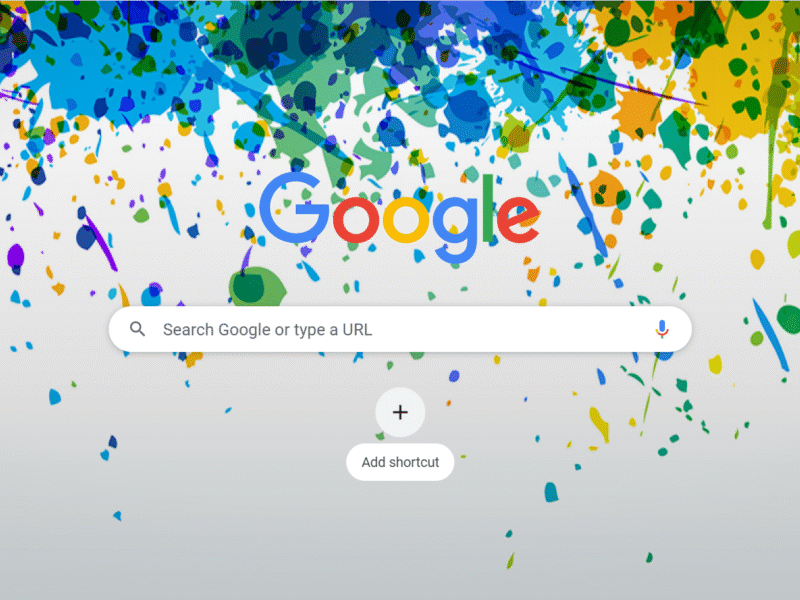
Have you ever opened your browser and seen that little line saying, “Search Google or type a URL”? It’s one of those phrases that every internet user knows — yet few people actually stop to think about. Is it an instruction? A choice? Or just a reminder that you have the world’s information at your fingertips?
Let’s dive into what it really means, how it works, and why it’s become such an essential part of modern browsing.
Understanding the Browser Interface
The address bar — or “Omnibox,” as Google calls it — is where the magic happens. This is the box at the top of your browser where you can either type a website address (like www.wikipedia.org) or enter a search query (like “what is photosynthesis”).
Essentially, your browser acts as both a navigator and a search engine gateway, merging two worlds into one simple bar.
The Evolution of the Address Bar
Back in the early 2000s, browsers had separate boxes — one for URLs and one for search terms. But Google Chrome changed the game with the Omnibox, introduced in 2008.
Now, you don’t need to choose between searching or typing a website. Chrome figures it out for you. Type “facebook” — and if it’s not a valid URL, it automatically performs a Google search.
Search vs. URL: What’s the Difference?
A URL (Uniform Resource Locator) is simply the address of a web page — like your home address, but for websites.
On the other hand, a search query is when you ask the internet a question. Instead of going directly to a website, you’re asking Google (or another search engine) to find relevant results.
Example:
- URL:
https://www.amazon.com - Search:
best laptops under $1000
How Browsers Detect User Intent
When you type something into the bar, your browser instantly decides — “Is this a website or a search query?”

If it detects a domain suffix like .com, .net, or .org, it treats it as a URL.
Otherwise, it sends your input to Google Search.
It’s fast, intuitive, and nearly flawless in predicting what users want.
How Google Search Works Behind the Scenes
When you choose to “Search Google,” here’s what happens:
- Crawling: Google’s bots explore billions of web pages.
- Indexing: It organizes those pages into a vast searchable database.
- Ranking: When you hit Enter, Google’s algorithm ranks results based on relevance, quality, and authority.
All of that happens in less than a second — talk about speed!
Typing a URL: The Direct Way to Navigate
When you type a direct address like https://www.nytimes.com, your browser immediately connects to that website’s server. It doesn’t go through Google; it’s a straight line.
It’s the digital equivalent of taking a private shortcut instead of asking for directions.
Common Mistakes When Typing URLs
We’ve all been there — typing gooogle.com or forgetting the “.com” entirely. These small errors can lead to error pages, redirects, or even malicious phishing sites.
Pro tip: Modern browsers often fix these typos automatically, but it’s always smart to double-check the address bar.
Why “Search Google or Type a URL” Became Iconic
It’s short, friendly, and perfectly sums up the browser’s dual purpose. Chrome’s design team wanted something that felt simple yet powerful — and they nailed it.
That phrase has since become synonymous with how people start their internet journeys every single day.
Browser Integration with Google Search
Although Chrome defaults to Google, you can change your default search engine to Bing, Yahoo, DuckDuckGo, or even custom options.
This means when you type something non-URL, your browser sends it to your chosen provider — not necessarily Google.
Privacy Concerns and Data Collection
Every time you search, your queries are logged for personalization, analytics, and ad targeting.
If that sounds unsettling, you can:
- Use Incognito Mode to limit tracking.
- Switch to privacy-focused browsers like Brave or DuckDuckGo.
- Regularly clear your cookies and browsing history.
Knowledge is power — and privacy is priceless.
Tips to Search Smarter
Want to level up your Google searches? Try these shortcuts:
- Use quotes
" "to find exact phrases. - Add a minus sign
-to exclude words. - Use
site:to search within a specific website (e.g.,site:wikipedia.org dogs). - Add
filetype:to find specific formats (e.g.,filetype:pdf resume template).
It’s like unlocking cheat codes for the internet.
Mobile Browsing and Voice Search
On mobile devices, you’ll see the same phrase — but with added convenience. You can tap the mic icon and say what you want to search.
“Search Google or type a URL” is now more literal than ever — you can literally speak your query instead of typing it.
Future of Web Search
The next phase of browsing is already here: AI-powered search. With tools like Google’s Search Generative Experience (SGE), results are becoming conversational, predictive, and more human-like.
One day, the bar might say: “Ask Google anything.” And that’s not far off.
Conclusion
The phrase “Search Google or type a URL” might seem mundane, but it perfectly captures the evolution of how we interact with the internet. It’s simple, intuitive, and a daily reminder that we hold access to infinite knowledge — right at the top of our screens.